Eye Movement Desensitisation and Reprocessing (EMDR) Therapy at Whelan Psychology
What is EMDR?
Eye Movement Desensitisation and Reprocessing (EMDR) is a powerful and well-recognised type of therapy designed to help people heal from psychological distress. It is particularly effective for Post-Traumatic Stress Disorder (PTSD), but is also used for a range of other conditions, including anxiety disorders, depression, and chronic pain.
EMDR is endorsed by the World Health Organization (WHO), Phoenix Australia, and the Australian Psychological Society (APS) as a Level 1 treatment for PTSD.
How Does EMDR Work?
When a person experiences a traumatic or distressing event, the brain can sometimes be unable to process the memory in a normal way. The memory can become "stuck" in the brain's limbic system in a raw, emotional form, along with the original images, sounds, thoughts, and feelings. When triggered, these unprocessed memories can lead to distressing flashbacks, overwhelming emotions, and physical sensations, making it feel like you are reliving the event.
EMDR uses bilateral stimulation (BLS) - a rhythmic, left-right sensory input - to help the brain reprocess these stuck memories. While you hold the distressing memory in mind, the BLS activates both sides of your brain. This process is thought to mimic what occurs naturally during the Rapid Eye Movement (REM) phase of sleep, allowing the brain to integrate the memory more adaptively. As a result, the memory loses its painful intensity and becomes just an ordinary memory of a past event.
Types of Bilateral Stimulation
Bilateral stimulation can be delivered in several ways. We will discuss which method is most comfortable for you.
Eye movements: following a therapist's fingers or a light as it moves from side to side.
Tapping: gentle, alternating taps on your hands, knees, or shoulders.
Auditory tones: alternating sounds or clicks delivered through headphones.
Buzzers (Theratapper): gentle, alternating buzzers held in your hands.
All forms of BLS are equally effective. If one method is not suitable for you, an alternative will be used.
What an EMDR Session Looks Like: The 8 Phases
EMDR therapy follows a structured, eight-phase approach to ensure your safety and treatment effectiveness.
History and Treatment Planning: we get to know your background and collaboratively identify the specific issues or memories to work on.
Preparation: you will learn grounding techniques and coping strategies to help you feel safe and manage any distress that may arise during or between sessions.
Phases 1 and 2 may happen over several sessions. When you are ready, we can then move into the more active processing phases:
Assessment: we will activate the specific memory we plan to work on by identifying the associated image, negative belief, emotions, and body sensations.
Desensitisation: we begin using bilateral stimulation to process the distressing memory. You will notice what comes to mind without judgement, and the process continues until the distress level reduces.
Installation: we work to strengthen a positive belief about yourself in relation to the memory until it feels true.
Body Scan: we check for any lingering physical tension or discomfort related to the memory to ensure it has been fully processed.
Closure: we ensure you feel calm and stable before the end of the session, using the relaxation skills learned in the preparation phase.
Re-evaluation: at the beginning of the next session, we review your progress and discuss any new insights or experiences since the last session.
Key Things to Know
You are in control. EMDR is not hypnosis. You will remain awake, alert, and in control throughout the session. You can stop the process at any time.
You do not need to talk in detail. EMDR does not require you to describe your trauma at length, which many people find less confronting than traditional talk therapies.
It is time-efficient. Many people experience significant relief in fewer sessions compared to other therapies.
It can be used with other therapies. EMDR can be a standalone treatment or integrated with other approaches like Acceptance and Commitment Therapy (ACT) or Cognitive Behavioural Therapy (CBT).
EMDR at Whelan Psychology
Session Intensity: during the processing phases of EMDR, it is often most effective to have more intensive treatment. We recommend weekly sessions rather than fortnightly.
Session Length: to allow sufficient time for processing and closure, EMDR sessions are typically 90 minutes long.
Cost: a 90-minute EMDR session costs $360.
Next Steps: we can discuss this process with you in detail and help set up a treatment plan that suits your needs. Phases 1 and 2 may happen over several sessions. When you are ready, we can then move into the more active processing phases.
Links to Useful Resources
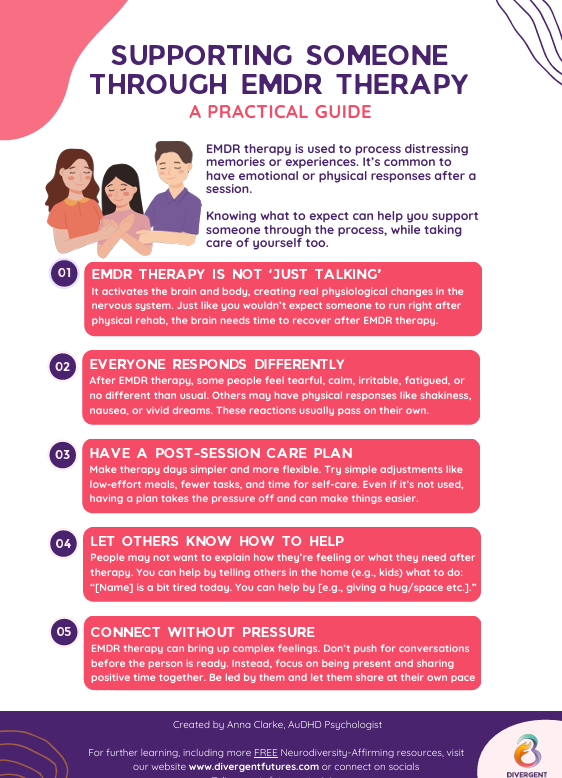
Click on the image to open this helpful handout in a new tab.
What is EMDR Therapy? (2 minute introductory video)